Skip to main content


If you’ve been out of the gym for a few years and you’re finally ready to do something about it, the first instinct is usually to just get a membership somewhere and figure it out. It feels low-pressure. No commitment, no schedule, no one watching. You can go at your own pace and ease back in quietly.
That instinct makes sense. But for most people restarting after a long break, it doesn’t actually work. Not because they’re lazy or lack willpower, but because going it alone removes the two things that matter most when you’re trying to build a new habit: accountability and community. Those two things are often the difference between someone who sticks with it and someone who quietly cancels their membership after six weeks.
The Real Problem Is Not Motivation, It Is Not Having a Plan
A lot of people assume the hard part of getting back into fitness is finding the motivation to go. But motivation is rarely the issue, at least not at the start. Most people are ready to put in the work. What stops them is not knowing what to do once they get there.
Walking onto a gym floor after years away is genuinely confusing. The equipment looks different, the routines you half-remember feel outdated, and there’s a real fear of doing something wrong and getting hurt. That fear around weightlifting and injury is more common than people admit, and it’s a completely reasonable concern. Picking up a barbell without any guidance and hoping for the best is how people end up with a pulled back and a reason to quit.
Without a plan, most people default to the cardio machines because they feel safe and familiar. That’s fine, but it’s not a program. It doesn’t build toward anything, and after a few weeks it gets boring and easy to skip.
What Fitness Classes Actually Give You That a Gym Floor Does Not
The two things a class format provides that a solo gym visit simply can’t are coaching and programming. Both matter more than most people expect.
Programming means someone has already figured out what you’re doing that day, how it fits into the week, and why. You don’t have to think about it. You show up, and the work is laid out. That removes a huge amount of friction, especially when you’re new or restarting and don’t yet have the knowledge to build your own training plan.
Coaching means someone is watching, correcting, and guiding you through the movements. That’s not just useful for getting fitter faster. It’s what makes training safe. The combination of a structured program and a coach who knows what they’re doing changes the experience completely compared to wandering around a gym floor on your own.
How Coaching Changes the Experience for Someone Starting Over
Proper technique matters a lot more than most beginners realize, and it’s very hard to learn on your own. Watching a YouTube video and then trying to deadlift is not the same as having a coach watch your movement, spot the problem, and fix it in real time.
For someone in their 40s getting back into training, this is especially important. The body is capable of a lot, but it also needs to be loaded correctly. A good coach helps you build strength and fitness without putting you in positions that lead to injury. That’s not about being cautious or going easy. It’s about training smart so you can keep training.
At CrossFit Liquid, the coaching is there every session. You’re not left to figure things out on your own. That consistency, having someone in your corner who actually wants to see you succeed, makes a real difference when you’re starting over.
The Accountability Factor: Why Showing Up Gets Easier in a Group
Working out with other people increases accountability in a way that’s hard to replicate alone. When you have a class at a set time and people who expect to see you there, skipping feels different than just deciding not to go to the gym.
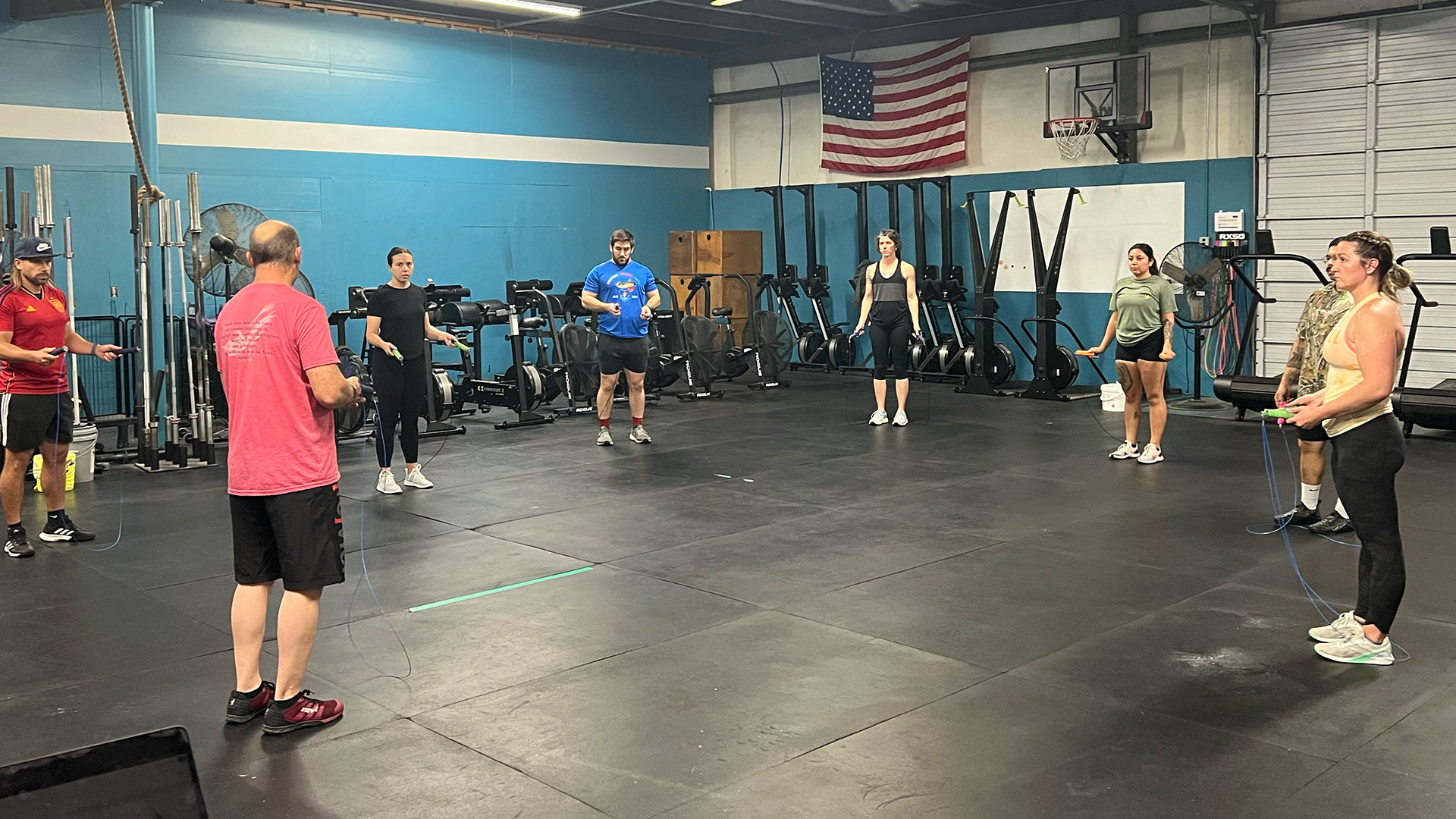
One thing worth knowing about the class environment: everyone is working out at the same time. That means no one is watching you or paying attention to what you’re doing. The only person focused on you is the coach, and their job is to help you, not judge you. The rest of the class is heads-down in their own workout.
That setup takes a lot of the self-consciousness out of it. You’re part of something, but you’re not on display.
What to Expect Walking Into a CrossFit Class for the First Time
The biggest surprise for most people walking into a CrossFit class for the first time is that everyone else looks completely normal. Not the athletes you see in competitions on TV. Just regular people, different ages, different fitness levels, all working through the same session together.
CrossFit has a reputation that puts some people off before they’ve even tried it. The reality inside most gyms is much more ordinary and welcoming than the image suggests. People are there to work hard and get better, and there’s generally a lot of goodwill toward anyone who’s new and giving it a go.
The class itself is coached from start to finish. There’s a warm-up, instruction on the movements, the workout, and usually some time to cool down and talk. You won’t be thrown in the deep end without any guidance.
How to Know If a Class Format Is the Right Call for You
If you’re someone who knows they need structure to stay consistent, who wants to learn how to train properly rather than guess, and who would benefit from being around other people working toward similar goals, a class format is probably the better option.
Classes offer guidance, community, and a ready-made program. They add real benefits to the gym experience without adding extra mental load. You don’t have to plan, research, or motivate yourself in isolation. You just have to turn up.
If you’re in Newport News and you’ve been putting this off, CrossFit Liquid runs classes for people at all levels, including those who haven’t trained in years. The best way to find out if it’s a good fit is to come in and try a session. No pressure, no expectation that you’ll be good at it straight away. Just a coached workout with a group of regular people doing the same thing.